
.jpg)
Aqua Kriya Yoga
Making yoga accessible for everyone!
Pioneering and leading education in Aqua YOga since 2000


Swami Nibhrtananda (Camella Nair) IAYT, Ayurvedic Health Educator, Aquatic Therapy and Rehabilitation Faculty


Getting Started With Aqua Yoga
You do not need prior yoga experience to begin Aqua Kriya Yoga. Many students start because mat classes feel hard on the joints, or because a doctor, therapist, or friend suggested gentle movement in warm water. This page explains how to prepare for a first visit and what a typical class feels like. For a full list of physical benefits, see our Benefits of Aqua Yoga page. Return to the Aqua Kriya Yoga homepage for teacher training, books, and registration links.
Before your first class
-
Arrive 10 to 15 minutes early so you can check in, meet the teacher, and enter the pool calmly.
-
Wear a comfortable swimsuit and bring a towel. Some students also bring water shoes or pool socks for grip on deck.
-
Tell the instructor about injuries, surgeries, blood pressure concerns, or pregnancy so poses can be adapted.
-
Eat lightly one to two hours before class. Hydrate before and after, even though you are in water.
-
Pools used for aqua yoga are usually heated (often around 84 to 88 degrees Fahrenheit). Bring layers for afterward.
-
Leave jewelry that can snag or tarnish in a locker. Goggles are optional unless your teacher uses submersion drills.
-
If you use a cane, walker, or wheelchair, ask the facility about pool lift access and deck seating before you travel.
Aqua Kriya Yoga has welcomed students recovering from joint replacement, living with arthritis or fibromyalgia, adjusting to pregnancy, and returning to movement after long breaks. You are not expected to keep up with athletic lap swimmers. The pace follows breath, not competition. Camella Nair has taught accessible water yoga since 2000, and many of her graduates now lead community classes in therapy pools and recreation centers.
What happens in the pool

During and after class
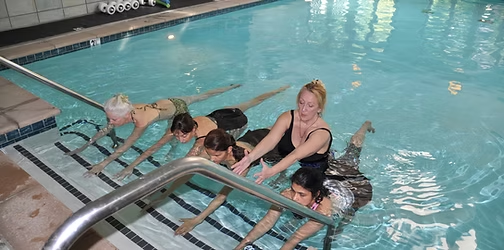
Classes often begin with breath awareness at the wall or in chest-deep water, then move through supported standing poses, floating variations, and quiet cooldown time. Buoyancy reduces load on knees and hips, so you can focus on alignment without forcing a shape. Water pressure can also support steady breathing, which many students notice within the first session.
Depth matters. Chest-deep water is common for standing work. Deeper water may be used for suspended postures with a noodle under the arms. Your teacher will show you how to use the gutter, steps, or a pool rail to rest whenever you need a break.
Props such as noodles, kickboards, or the pool wall are used for balance, not as a test of flexibility. Teachers trained in the Aqua Kriya Yoga teacher training program learn how to cue breath, safe entry, and modifications for mixed abilities in one lane.
After class, plan a few minutes to shower, rehydrate, and note how your joints and energy feel. Some students feel deeply relaxed and sleep better that night. Others feel pleasantly worked in the core and shoulders. Both responses are normal when you are new to water practice.
Most students leave feeling lighter, warmer, and more at ease in their breathing. If you want to study the method in depth, read the Aqua Kriya Yoga book or review training information for certification dates.
Questions about scheduling or accessibility? Visit Contact Us or return to the homepage.
